Kite Blog Langebaan
Kitesurfing Levels Explained: Where Are You, and What Comes Next?
"What level am I?" sounds simple, but it is one of the hardest questions for a kiter to answer honestly. Maybe you had two days of lessons on holiday years ago, or you can get up on the board but always finish a long walk downwind.
This guide breaks kitesurf progression into clear levels, from your very first kite to your first jumps, so you can place yourself on the map and pick the right next step. We use the International Kiteboarding Organization (IKO) levels as a reference, because most schools around the world use them and our instructors are IKO or VDWS qualified. Think of them as signposts, not exam grades.
How Kitesurfing Levels Work
The IKO splits learning into three main kiteboarder levels: Level 1 (Discovery), Level 2 (Intermediate) and Level 3 (Independent). Each one is a group of skills you can show your instructor, not a number of hours you have spent on the water. Two people with the same hours can be at very different levels, and that is completely normal.
Beyond Level 3 there are advanced skills such as transitions, toeside riding and jumping. Below, we add a fourth stage, "progressing rider", to cover that ground in plain language.
A good rule of thumb: your level is the last set of skills you can do every time, in normal conditions, without help. If you managed a waterstart once on your last day, you are still working on it.
Level 1
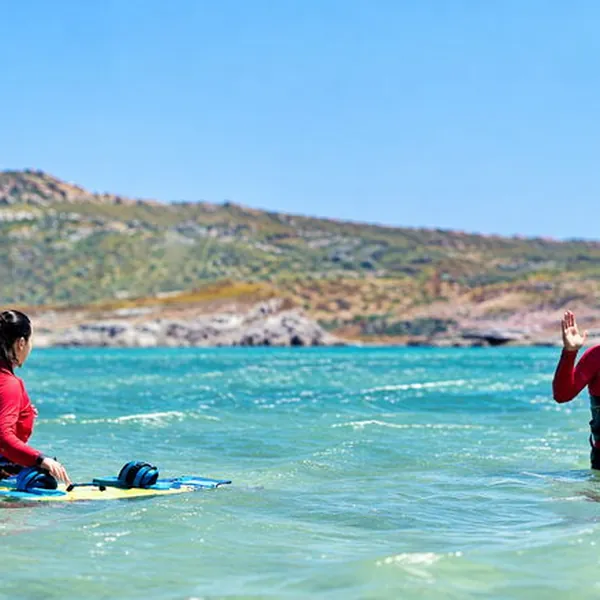
Level 1: Discovery (Kite Control)
This is where everyone starts, and it is mostly about understanding the kite and the wind.
What you learn at this level
- How the wind works and where the "wind window" is
- Setting up the kite, bar and lines with your instructor
- How the safety systems work, including the quick release
- Flying the kite on the beach and controlling its power
- Launching and landing with an assistant
You are probably at Level 1 if...
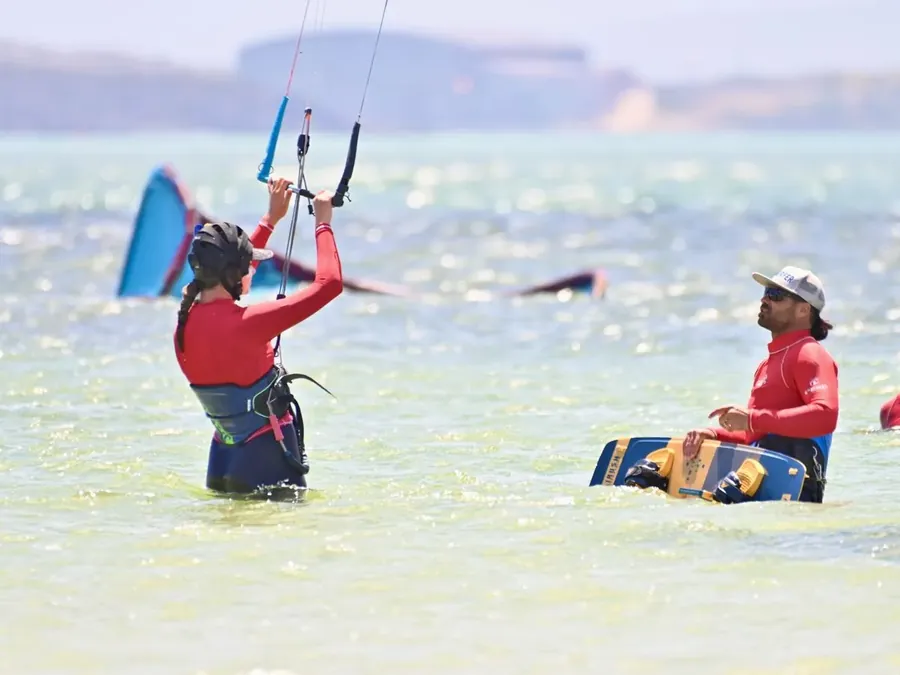
You have never flown a kite, or you have flown a trainer kite but would not feel sure setting up a full-size kite or using the quick release without someone talking you through it.
Your next step
A beginner course. Day 1 of our beginner kitesurfing lessons covers kite theory, wind awareness, safety systems, flying the kite on land and, when conditions allow, your first body drag in the water.
Level 2
Level 2: Intermediate (Into the Water)
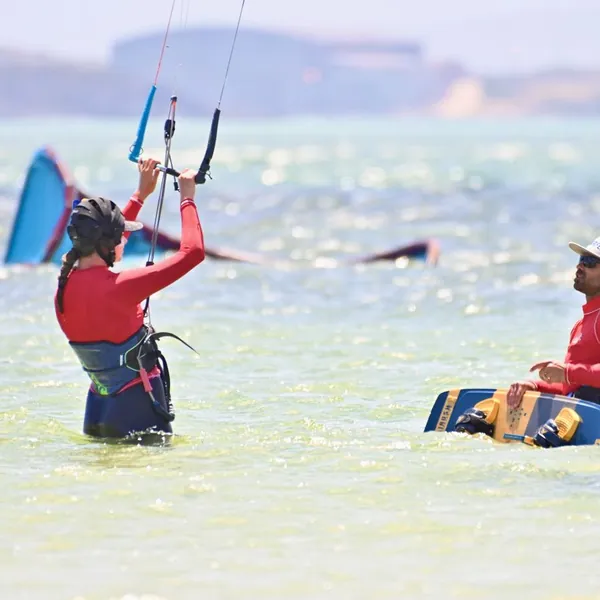
Level 2 takes the kite into the water. You learn to let it pull you along, look after yourself and your equipment, and start using the board.
What you learn at this level
- Getting in and out of the water while flying the kite
- Relaunching the kite from the water
- Body dragging, including body dragging upwind to get back to your board
- Self-rescue in the water
- The basic right-of-way rules
- The waterstart, and your first short rides
You are probably at Level 2 if...
You can fly the kite with confidence and body drag back to your board, and you have tried waterstarts, perhaps with a few short rides, but you cannot yet ride consistently in both directions.
Your next step
The rest of the beginner programme. Day 2 of our private and group courses focuses on body dragging with the board, water relaunch, self-rescue and the waterstart. Our three-day private course (9 hours) adds upwind riding, directional control, and launching and landing on your own.
If you want to know how many hours this stage usually takes, our instructor Wesley answers that in our interview, how long it takes to learn kitesurfing.
Your level is the last set of skills you can do every time, in normal conditions, without help.
Level 3
Level 3: Independent Rider
This is the big milestone. An independent rider can go out, ride and come back to where they started, safely and without help.
What you learn at this level
- Controlling your speed by edging, and stopping when you choose
- Riding upwind, so you finish the session where you started
- Changing direction (transitions)
- Riding among other kiters and respecting right of way
- Launching your kite yourself
- Self-rescue and packing down your kite in deep water
You are probably at Level 3 if...
You ride in both directions, hold your ground or work upwind, and can deal calmly with a dropped kite. If you can ride but usually walk back up the beach at the end of every session, you are on the way to Level 3 rather than there yet. That is the most common place to get stuck.
Your next step
If you have had a break, or you learned somewhere else and want a check-up, book a kitesurfing refresher session. It starts with a skills assessment, then works on water starts, kite control and power zones, and ends with an independent-riding sign-off. It is private, one-to-one, with a two-hour minimum.
Level 3 also matters if you plan to rent. To rent kitesurf gear with us, you need a valid IKO Level 3 certificate or an equivalent recognised qualification, and you must be able to ride upwind, self-rescue and launch and land on your own. You can read the full requirements on our kitesurf equipment rental page.
Level 4
Level 4: Progressing Rider
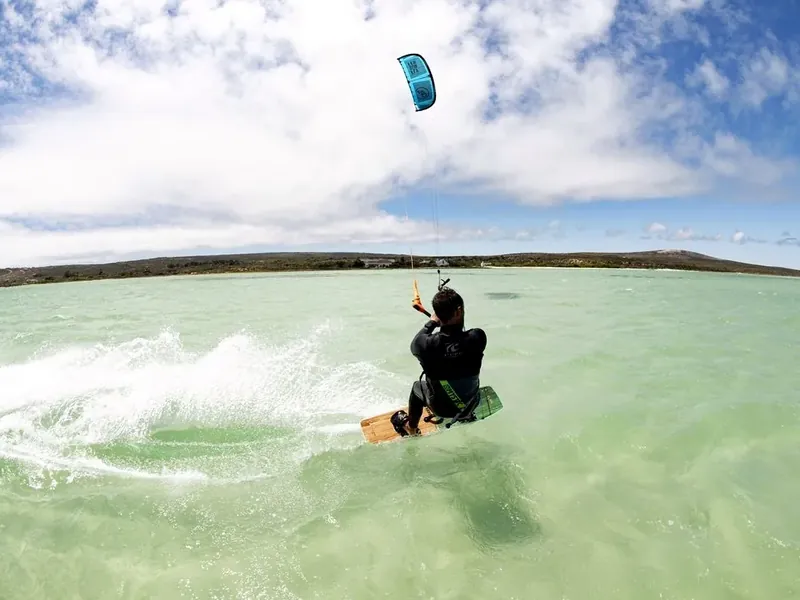
Once you are independent, kitesurfing opens up in every direction. Riders at this stage usually work on:
- Smoother transitions and riding toeside
- Riding upwind more efficiently
- Your first jumps, and landing them under control
- Board-offs and other new tricks
- Better technique, so you ride more comfortably for longer
Your next step
You have two good options. Advanced Coaching on our refresher and advanced coaching page is one-to-one time built around the skill you choose, with live coaching over the radio while you ride. If you want to put several days together, a kitesurfing clinic on Langebaan Lagoon runs from 1 to 8 days, with each session picking up where the last one finished. That is usually where the real progress happens.
Quick Self-Assessment: Pick Your Lesson
Why Being Honest About Your Level Pays Off
It is tempting to book one level up, but skills like body dragging upwind and self-rescue are what make you safe and independent later. Skip them and you usually end up repeating them.
Langebaan helps here. The lagoon has large areas of shallow, flat water, with no big waves or shore break to deal with, so you can focus on the skill in front of you. Our courses come with radio-guided coaching and a rescue boat on the water. To see how the radio works on the water, read how radio coaching works in our kite and wingfoil lessons.
Plan Your Next Step
The main wind season runs from October to April, when the south-easterly blows most reliably. Check the Langebaan live weather and wind cam before you choose your dates. You can compare every course, refresher and clinic side by side on our kitesurfing and wingfoil course and price comparison, and our kitesurfing FAQs answer the common questions about fitness, equipment and days with no wind.
Whatever your level, there is always a next skill to work on, and Langebaan Lagoon is a very good place to learn it.